If you’ve been in the EA role for a while, you might be starting to see that the way executives work is changing, and that is shaping what the next generation of Executives expect from their Assistants.
The executives we support are changing, and the way they work, communicate, and make decisions is different from even five or ten years ago. A lot of this comes down to who is now leading organizations.
Millennials are now the largest group in management and are moving into senior leadership roles. Gen X is still very much present at the top, and Gen Z is starting to step into leadership as well. At the same time, many Baby Boomers are still in the workforce, often in senior, advisory, or board-level roles. So we now have a mix of leadership styles, expectations, and ways of working, all happening at the same time.
As EAs, this matters. Because how our Executive thinks and works shapes what they expect from us.
So in this article, we are going to walk through what the next generation of Executives expect from their Assistants, what they are like, what that looks like day to day, and what we can do to keep pace and add real value.
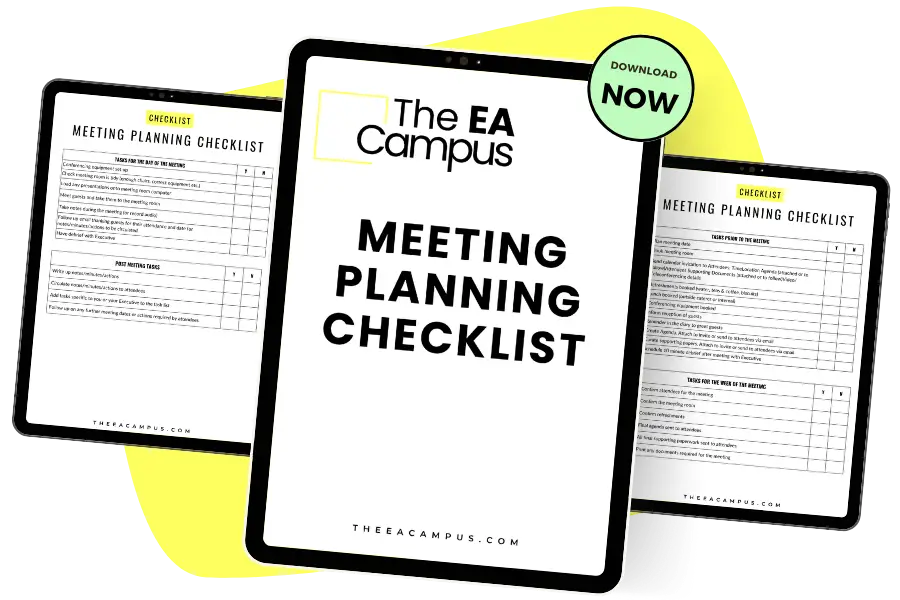
Use this template to quickly and effectively plan any meeting.
Ensure that every meeting is planned meticulously and that your Executive is prepared for every meeting they attend with our free Meeting Planning Template for Executive Assistants.
They think commercially and expect you to keep up
Executives today are expected to understand how the business actually makes money, how deals move forward, and where things can stall. They are closer to revenue conversations, and they are expected to make decisions that stand up to scrutiny. This is a clear example of what the next generation of Executives expect from their Assistants.
What this can look like in practice is quite different from what we may have seen before. For example, in a meeting, your Executive might start asking very specific questions about why a deal is stuck, what the client is pushing back on, or what the next step is to move it forward, rather than just listening to a general update.
Or over email, instead of approving something quickly, they might come back asking for more detail, clearer numbers, or a short summary before they decide. You might see messages like, “Can you sense check this before I respond?” or “What are we actually trying to achieve here?”
As EAs, this is where we can step in. If we understand the context, we can anticipate these questions, prepare the information in advance, or even flag gaps before it reaches them. It makes their decision-making easier and shows that we are thinking at the same level as they are.
So you may notice your Executive asking more detailed questions, getting involved later in deals, or wanting clearer information before making a call. This is also where we see, in a very practical way, what the next generation of Executives expect from their Assistants.
As EAs, this means we need more context around what is happening. It is not enough to just know the schedule. We need to understand why things are happening and what matters most.
You can do this by asking better questions, sitting in on the right conversations where possible, and keeping track of priorities that move things forward. This gives you a much clearer view of what your Executive is trying to achieve.
They are comfortable with AI and expect you to be as well
Many Executives are already using AI in their own work. They are using it to prepare, to summarise, and to move faster through information. So naturally, there is an expectation that we are doing the same.
As EAs, this means learning the tools and using them to improve how we work day to day. You might be using AI to draft emails, summarise meeting notes, prepare briefings, or sense-check information.
There is also a role here for us as a filter. Not everything that comes out of AI is useful, and sometimes it needs refining or sense-checking before it is shared more widely. This is where we add value by making sure the output is clear and usable.
If we want to stand out here, there are a few practical ways to approach it.
We can suggest better ways of working. For example, if you notice your Executive repeating the same type of task each week, you might suggest a simple way to use AI to speed it up or improve consistency.
We can also translate what is happening. If your Executive is talking about a tool or a technical idea, we can turn that into clear business language for others so they understand what it means and what needs to happen next.
For example, in a meeting your Executive might say, “We could use this tool to reduce manual work in reporting.” As EAs, we can follow that up with something more concrete for the group, like, “So the goal is to reduce the time spent on weekly reporting and make the data easier to access. The next step would be to test this with one team and see how much time it saves.”
Or over email, your Executive might forward a message about a new platform with very little context. Instead of passing that on as it is, we can add a short summary, “This would help the team track client updates in one place and reduce back and forth. They are asking if we want to pilot it next quarter.”
It is a small shift, but it helps everyone understand what is being asked and what to do next, and it positions us to bring an extra layer of information and explanation.
And we can keep building our own skills. There are so many accessible ways to learn now, whether that is short courses, videos, or just testing tools in your own workflow. At The EA Campus, we offer masterclasses, online courses, and events to help EAs build their tech and AI skills in a practical way. Keeping your knowledge current makes it much easier to keep pace with how your Executive is working.
They communicate more openly, but not always clearly
Communication styles are changing. Many Executives are more open, more informal, and more collaborative in how they communicate. This is another example of what the next generation of Executives expect from their Assistants.
That communication also comes through multiple channels. You might get a quick idea on WhatsApp, a voice note, a Slack message, a follow-up email, and then a different version of the same idea in a meeting. It can feel fragmented, and details can get lost.
At the same time, things are less structured. You might get half-formed thoughts, a quick decision, or a comment that implies a direction without being fully confirmed by your Executive.
As EAs, we often become the person who brings this together and turns it into something clear and usable. Not everyone knows how to do this yet, so it helps to break it down into simple steps.
First, capture what is actually being said. Keep notes from meetings, save key messages, and track decisions across channels so nothing gets missed. Second, sense check what is confirmed and what is still an idea. If something is unclear, go back to your Executive with a short question like, “Do you want me to treat this as a decision or are we still exploring options?”
And lastly, summarise in one place. This could be a short follow-up email, a Slack update, or a shared document. Keep it simple. What was discussed, what was agreed, and what happens next.
For example, after a meeting, you might send, “Just to confirm, we are moving ahead with option B, the timeline is next month, and the team will send an update by Friday.” Or if instructions come through different channels, you might pull them together and send, “From the messages earlier, the priority is the client presentation, then the report, and the draft needs to be ready by Thursday.” It also helps to check assumptions with others who attended the meeting or were copied on the message. A quick note like, “Just checking we are all working to the same plan here,” can save a lot of confusion later.
These are simple actions, but they make a big difference. They help your Executive stay focused, and they make it much easier for the wider team to understand what is expected. This is exactly where the next generation of Executives expects their Assistants to be visible in day-to-day work.
They care about people, culture, and how work feels
There is a stronger focus on how people experience work. This generation of Executives are thinking more about team culture, flexibility, and how individuals are supported.
You may see your Executive spending more time on team conversations, feedback, or creating space for people to contribute. You may also find that some of this work lands with you. That can include organizing social events, planning team sessions, or supporting team-building activities so people feel connected and clear on how they work together.
As EAs, we are part of that environment as well. We see how the team operates, we hear feedback, and we often notice when something feels off before anyone else says it out loud. We also handle sensitive information, so there is a balance to manage. Your Executive may want an open, approachable culture, but you still need to keep confidential work protected and handled carefully. This is where your experience in the role matters. You might be sharing general updates more openly while holding back details that aren’t ready to be shared yet.
If your Executive is open and enjoys people dropping in or having informal conversations, that can work well for culture, and it can also disrupt their focus. As EAs, we often need to manage the diary more actively, protect focus time, and reset expectations when needed to keep the day on track.
At times, with the next generation of Executives, this means being a bit more direct and, if we are honest, playing bad cop. You might need to step in and say a meeting needs to end, move conversations along, or let someone know your Executive is not available, even if they are sitting right there. You might block time and hold it, even when others try to take it. It might feel uncomfortable at first, but it helps your Executive stay focused and keep their commitments.
They move faster and expect you to keep pace
In most businesses these days, decision-making is quick. Priorities can shift within a day, and plans can change with very little notice. So waiting for everything to be fully clear before taking action can really slow things down.
As EAs, we often need to work with partial information, make informed calls, and keep things moving while details are still being figured out. This comes with experience, but it also comes from building trust with your Executive, so you know where you can step in and make decisions.
They expect you to operate as a partner
The next generation of Executives are looking for people who understand what is going on, who can spot issues early, and who can contribute to how things run. This is another clear example of what the next generation of Executives expect from their Assistants.
They are also less fixed on hierarchy. So if they see you as a strategic business partner, they will expect you to contribute. In a meeting, they may look to you for a view or ask directly what you think. Staying silent can be confusing for them, because from their perspective, you are part of the conversation.
So your role naturally becomes more visible, and there is more scope in how you contribute day to day. This is also where what the next generation of Executives expect from their Assistants becomes more obvious in how you are expected to take part in conversations.
This might mean sharing your perspective in conversations, flagging when something does not feel right, or stepping forward to solve a problem before it escalates. It also means being ready to take those moments when they come up, even if you are not used to speaking in those settings.
It can feel like a shift, especially if you are used to staying behind the scenes, and this is where much of the value now lies when working with the next generation of Executives.