The way we approach onboarding new staff has changed dramatically. In 2025, onboarding new staff is about more than paperwork and welcome emails. Hybrid work, AI tools, and new employee expectations mean the process must be intentional, personalized, and well-organized from day one.
Executive Assistants play a critical role in this. We’re often the first point of contact for new hires, ensuring everything runs smoothly behind the scenes. From coordinating equipment and meeting schedules to helping them connect with the right people, we make onboarding work on a human and practical level. We ensure new starters feel supported, informed, and part of the team.
Onboarding is no longer just HR’s responsibility. It’s a cross-functional effort that brings together IT, leadership, and operations. As EAs, we bridge these areas, managing logistics, communication, and culture. We are often given the big onboarding plan and asked to manage the tasks, making sure every detail is in place so new hires can focus on learning and contributing quickly.
This guide to onboarding new staff will help you build an onboarding process that works. It covers the essentials: planning the first 90 days, managing logistics, fostering culture and connection, supporting Executive onboarding, and using tools and templates that make everything easier.
The EA’s Role in Modern Onboarding
When it comes to onboarding new staff, Executive Assistants are often the ones holding everything together (as per usual!). We bridge the gap between HR, IT, and leadership, ensuring the process runs smoothly and that everyone involved knows what needs to happen next. Our attention to detail and ability to anticipate needs set the tone for a professional and welcoming start.
We are usually the first friendly face a new hire meets, whether that’s in person or online. From arranging their welcome meeting to organizing team introductions, we make sure they feel comfortable and informed. When onboarding new staff, these early interactions are crucial in helping them feel part of the company from day one.
Managing logistics is a big part of the job. We coordinate calendars, order equipment, confirm system access, and track progress across departments. We also support communication between the new hire and key contacts, ensuring they always know who to reach out to. Balancing efficiency, empathy, and confidentiality helps create a seamless onboarding experience for everyone involved.
The EA’s involvement can make or break a new hire’s first impression. When onboarding new staff, small details—like a clear itinerary, working laptop, or timely introduction—can make a lasting difference. By owning this process, we help both the executive and the new employee start their working relationship on the right foot.
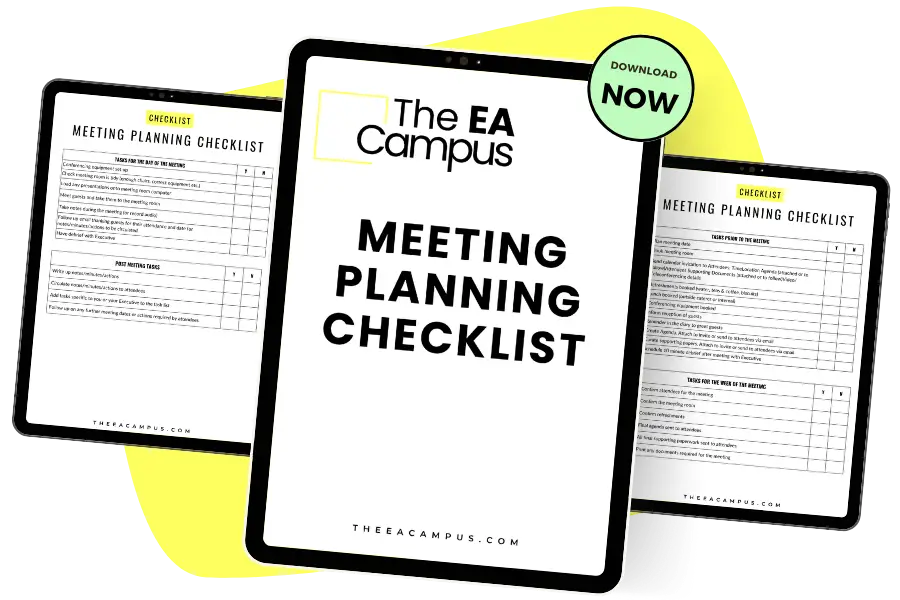
Use this template to quickly and effectively plan any meeting.
Ensure that every meeting is planned meticulously and that your Executive is prepared for every meeting they attend with our free Meeting Planning Template for Executive Assistants.
Trends Shaping Onboarding
The way organizations handle onboarding new staff continues to evolve. Technology and personalization are driving better, more connected experiences. For Executive Assistants, understanding these trends helps us design onboarding processes that feel efficient, thoughtful, and modern.
Personalization and AI integration
AI tools can now tailor onboarding plans to each individual, adapting training materials and resources to match their role and experience. Automated systems handle repetitive tasks such as sending reminders, scheduling introductions, and tracking progress, freeing EAs to focus on high-value, human interactions.
Common tools bringing these changes include:
ChatGPT or Microsoft Copilot for generating onboarding materials, answering common questions, and automating communication.
BambooHR and Workday for centralized onboarding workflows and analytics.
Notion and ClickUp for building personalized onboarding hubs and checklists.
Lattice and CultureAmp for performance tracking, engagement, and feedback during onboarding.
Connection and culture
Creating a sense of belonging has become a priority. Hybrid work makes it harder for new hires to build relationships, so EAs are intentionally setting up buddy systems, organizing early team meetings, and facilitating informal introductions. EAs are often at the cornerstone of creating culture within organizations, helping to shape how people connect and collaborate from the start. This is where we can truly shine, using our influence to make new employees feel supported and part of something meaningful from day one.
Digital-first onboarding
Centralized onboarding platforms, shared drives, and communication tools like Slack or Teams keep information accessible and consistent. EAs play a vital role in ensuring new hires know where to find key resources and how to use them effectively.
In practice, this means:
Creating and maintaining digital welcome packs or onboarding hubs in tools like Notion, SharePoint, or Google Drive.
Setting up access to communication platforms such as Slack, Teams, or Zoom, and ensuring the new hire joins the right channels or groups.
Coordinating online orientation sessions and scheduling video introductions with key team members.
Managing shared calendars and digital checklists that track onboarding milestones.
Gathering quick feedback through online forms or AI assistants to resolve questions early.
By taking ownership of these tasks, EAs ensure onboarding new staff remains organized, consistent, and efficient across in-office, remote, and hybrid settings.
Continuous onboarding
Modern onboarding runs well beyond the first week. For Executive Assistants, this means maintaining consistent oversight, ensuring every stage of the process is completed, and supporting both the new hire and their manager as they settle in. A structured 90-day plan allows new hires to build confidence step by step while helping EAs track progress and keep communication flowing.
This approach also influences workload. EAs coordinate meetings, follow up on training, and monitor progress through feedback or digital tracking tools. It requires organization and attention to detail but delivers strong results in retention and engagement. The next section breaks this down into clear, practical stages and EA-focused tasks to make the process easier to manage.
Building the Onboarding Plan: Your 90-Day Framework
A well-structured 90-day onboarding plan helps new hires settle in smoothly and sets clear expectations for everyone involved. For Executive Assistants, this framework serves as both a checklist and a project plan. It allows us to coordinate tasks across departments, track progress, and make sure every part of the onboarding journey runs efficiently.
First 30 Days: Orientation & Foundation
The first month focuses on creating a smooth start and building familiarity. EAs should:
Prepare the workspace and IT setup, coordinating with IT and facilities to ensure all equipment, access, and software are ready before day one.
Send a personalized welcome email with a detailed itinerary for the first week, including introductions, training sessions, and team meetings.
Schedule the new hire’s orientation, culture sessions, and one-to-one meetings with key colleagues.
Liaise with HR to confirm all compliance and paperwork are complete, and that training resources are accessible.
Organize a buddy or mentor pairing and set up informal “coffee chats” to build early connections.
Hold regular check-ins (either directly or via the buddy) to answer questions and track progress.
For remote staff, arrange a virtual workspace setup guide, video introductions, and access to digital welcome packs.
Days 31–60: Skill Development & Integration
During this phase, EAs support the transition from learning to doing. Tasks include:
Coordinating with managers to schedule deeper role-specific training and ensure materials are updated in the LMS or onboarding platform.
Scheduling cross-departmental meetings and shadowing sessions to help the new hire understand wider business functions.
Managing the calendar to balance onboarding sessions with hands-on project work.
Encouraging early wins by helping the manager assign achievable first tasks or projects.
Tracking progress updates through feedback from both the new hire and their manager.
Reinforcing culture and team connection through team lunches, virtual catch-ups, or company events.
Days 61–90: Productivity & Ownership
By this stage, the new hire should feel confident and integrated. EAs focus on sustaining momentum and gathering insights for improvement.
Ensure the new hire has full access to systems, resources, and any team-specific tools.
Coordinate with the manager to organize a 60- or 90-day performance review or informal feedback session.
Gather structured feedback from the new hire on their onboarding experience using surveys or informal discussions.
Identify any additional training needs or development opportunities and share these with HR or the manager.
Facilitate introductions to broader networks or cross-functional teams to encourage long-term collaboration.
Document lessons learned from the process and update internal onboarding templates or checklists.
Pre and Post-Arrival EA Tasks
A clear 90-day plan will help you reduce confusion, build engagement, and help you and the new hire stay on track. Each stage involves coordination, follow-up, and attention to detail, skills where Executive Assistants excel. Before the new member of staff arrives, EAs should:
Confirm the start date and communicate it to the relevant departments.
Coordinate with IT and facilities to ensure all hardware, software, and workspace needs are ready.
Prepare a welcome pack or digital onboarding folder.
Schedule orientation sessions, key introductions, and initial meetings.
Notify team members and managers of the new arrival and share key details.
Set up access to email, calendars, and essential systems.
Once the new member of staff has started, EAs should:
Conduct a quick welcome check-in to ensure everything is working as expected.
Introduce them to team members and direct points of contact.
Monitor their onboarding schedule and adjust timings as needed.
Gather feedback after the first few days to identify any gaps or issues.
Maintain communication between HR, IT, and management to resolve any onboarding challenges.
Your Onboarding Checklist
An effective onboarding checklist keeps everything organized and ensures nothing is missed during a new hire’s first few weeks. This list can be adapted to fit your organization’s needs or copied into your preferred project management tool. Use it as a working document to track progress and communicate with other departments.
Equipment and Tech Setup
- Confirm laptop, monitor, and accessories are ordered and ready.
- Arrange system access, passwords, and accounts with IT.
- Test equipment before the new hire’s first day.
- For hybrid or remote staff, ensure delivery and connectivity checks are complete.
Communication Channels
- Add the new hire to email groups, Slack or Teams channels, and internal distribution lists.
- Schedule an introductory call or meeting with the executive and team.
- Share details on preferred communication tools and meeting etiquette.
- For hybrid setups, confirm access to video conferencing tools and shared drives.
Welcome Itinerary
- Send a personalized welcome email with first-day instructions and meeting schedule.
- Include a clear timeline for the first week.
- Coordinate calendar invites for all training and orientation sessions.
- Confirm attendance and availability of key stakeholders for introductions.
Introductions and Meetings
- Create an introduction plan with relevant stakeholders.
- Schedule 1:1s with department heads, project leads, and direct teammates.
- Set up informal coffee chats or buddy catch-ups.
- Track completed introductions and follow up if any are missed.
Training and Resources
- Confirm access to Learning Management Systems or onboarding platforms.
- Share key company policies, handbooks, and organizational charts.
- Provide any required compliance or safety training information.
- Add optional development sessions or webinars to their schedule.
Culture and Connection
- Organize a welcome lunch or team social (virtual or in-person).
- Assign a buddy or mentor for day-to-day support.
- Share internal communication guides and cultural values.
- Encourage participation in internal events or community groups.
Feedback Loops
- Schedule a 30-day and 90-day feedback session with the manager.
- Check in regularly to assess progress and address challenges.
- Gather feedback on the onboarding process for improvement.
- Record lessons learned and update onboarding templates accordingly.
Use this checklist as a live document to monitor each step of onboarding new staff. It helps maintain consistency, promotes collaboration across departments, and gives every new hire a smooth start.
Onboarding in a Remote or Hybrid World
Remote and hybrid work have changed the way onboarding new staff is managed. EAs play an essential role in making the experience personal, efficient, and connected, even when people are not in the same location. The goal is to replicate the warmth of in-person onboarding while maintaining clear communication and consistent follow-up.
Replicating the In-Person Experience Online
EAs can help new hires feel welcome by arranging video introductions, sending a personalized digital welcome pack, and organizing a virtual coffee with key team members. Small touches, like a short welcome video from the executive or team, go a long way in building early rapport.
Maintaining Connection Across Distance
When teams are dispersed, regular contact matters. Schedule weekly check-ins with the manager or buddy and make sure the new hire is added to social and professional channels. Encourage participation in virtual team meetings, informal catch-ups, or online events to keep relationships strong.
Tools for Remote Onboarding
Use digital platforms to streamline communication and training:
Zoom or Teams for video introductions and recurring meetings.
Notion or ClickUp to organize onboarding materials and task lists.
Slack or Google Chat for daily updates and informal conversations.
Learning Management Systems (LMS) for structured training sessions.
AI chatbots for quick answers to common questions or automated reminders.
Creating Micro-Moments of Connection
Plan short, informal interactions that help new hires feel seen and included. Examples include sending a welcome message in a team channel, organizing five-minute virtual introductions, or sharing company traditions in a quick video call. These moments build trust and belonging.
Keeping Communication Consistent and Proactive
EAs should monitor communication flows, ensuring the new hire always knows where to find information and who to contact. Use clear summaries after meetings, provide weekly updates, and encourage open questions. Consistency helps remote employees feel supported and confident.
Strong remote onboarding comes down to planning, follow-up, and genuine human connection, all areas where you, as an Executive Assistants, excel.
Supporting a C-Suite Onboarding Experience
Onboarding a C-suite Executive requires precision, discretion, and strategy. EAs supporting senior leaders have a direct impact on how quickly an Executive becomes effective and confident in their new role. The process is faster-paced and more visible than typical onboarding, so preparation and communication are key.
How C-Suite Onboarding Differs
Senior Executives are expected to deliver results quickly, so onboarding focuses on access, insight, and alignment rather than basic orientation. EAs coordinate briefings, introductions, and logistics while helping the new leader understand the organization’s culture, decision-making processes, and priorities. The goal is to provide structure without overwhelming them.
Building the 30–60–90-Day Roadmap
EAs can create a tailored onboarding plan in consultation with HR, the CEO, and the board. It should outline milestones, meetings, and strategic priorities for the first three months. The roadmap might include:
First 30 days: Deep orientation, reviewing key projects, stakeholder mapping, and understanding organizational dynamics.
Days 31–60: Leading selected initiatives, setting early objectives, and meeting cross-functional teams.
Days 61–90: Establishing influence, reviewing performance goals, and aligning long-term strategy with leadership expectations.
Managing Access and Information
EAs act as gatekeepers for high-level onboarding materials. This includes briefing packs, board presentations, and key reports. The EA ensures the Executive has secure access to systems and confidential documents, while maintaining control over what information is shared and when. Regular updates keep the Executive informed without overload.
Facilitating Strategic Introductions
The EA schedules introductions with board members, senior leadership, and major partners. These meetings are not just social; they set the foundation for influence and collaboration. EAs should brief both sides before each meeting, ensuring the Executive enters each discussion with context and clarity.
Driving Cultural Immersion
Executives must quickly grasp the organization’s values, communication style, and internal politics. EAs help by organizing informal interactions, team lunches, and one-to-one discussions that reveal how things work day to day. Culture often lives in the details, and EAs are well placed to highlight them.
Confidentiality and Alignment with Leadership
Supporting a senior leader involves managing sensitive information with absolute discretion. EAs must stay aligned with the CEO, HR, or board on what to communicate and when. Consistent updates, well-managed calendars, and secure handling of data build trust and protect reputations.
Celebrating and Communicating the Appointment
EAs often coordinate internal and external announcements, managing logistics for leadership introductions, newsletters, or press releases. Internally, a welcome message or team town hall helps the Executive connect with staff. Externally, coordination with communications teams ensures the organization presents a unified message.
Effective C-suite onboarding positions the EA as a strategic partner. Attention to timing, relationships, and communication helps the executive settle quickly and perform with confidence from day one.
Why Great Onboarding Is Strategic
Onboarding new staff is one of the best ways to shape how people experience your organization from the very start. When Executive Assistants take ownership of this process, they can do more than just organize logistics; they can create a first impression that reflects the company’s values and leadership style. Done well, onboarding new staff builds confidence, connection, and trust right from day one.
As EAs, we see every part of the process, from setting up equipment to planning introductions. The way we manage these details shows new hires that they’re supported and valued. A smooth onboarding journey also strengthens how the Executive and wider team are perceived, helping everyone start off on the right foot.
Good onboarding doesn’t end after the first week. Keep checking in, gathering feedback, and refining your approach as each new person joins. Every new hire gives you a chance to improve the experience and make it even more effective next time.
When you take the lead on onboarding, you’re showing strategic thinking, leadership, and care, all qualities that make EAs indispensable. For more guidance on people management, communication, and leadership development, explore our courses at The EA Campus.